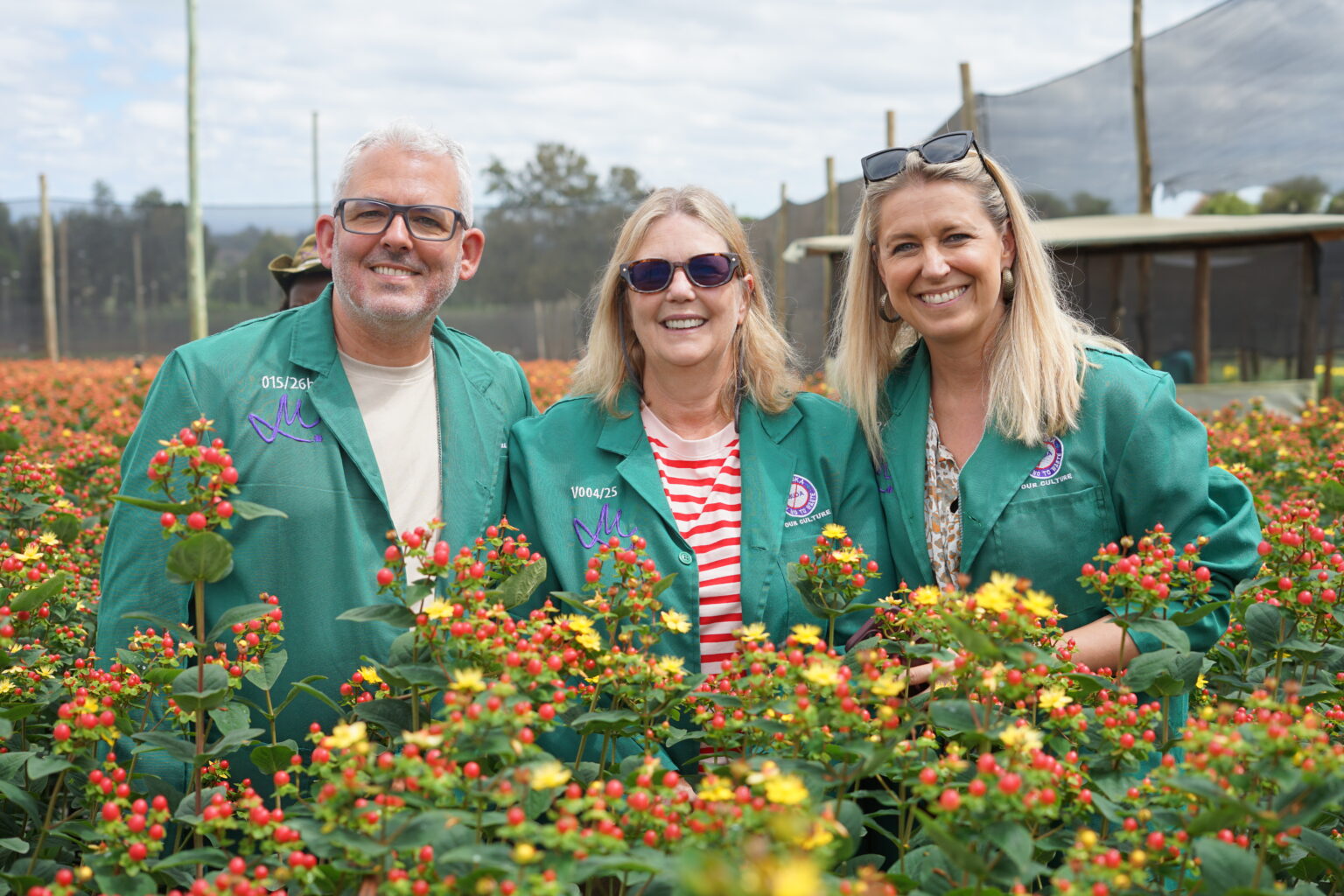
In early June, British Florist Association Directors Jamie Grant, Katrina Skybak-Doyle and Jo Biddle travelled to Kenya as guests of Florint and Marginpar, joining a small international group of florists and industry representatives for an immersive look at flower production in East Africa.
Over four days, we visited several flower farms, met the people behind the businesses, and gained first-hand insight into the growing, harvesting and processing of flowers destined for markets around the world, including the UK.
As an organisation committed to supporting florists with balanced, practical and informed information, the visit provided a valuable opportunity to see part of the supply chain that many florists rely upon every day, but few have the opportunity to experience in person.

Seeing the Supply Chain First-Hand
One of the strongest messages to emerge from the visit was the importance of understanding the realities behind flower production.
From soil preparation and crop management through to harvesting, grading and packing, we observed the significant skill, care and labour involved in producing high-quality flowers. Much of the work remains highly manual, requiring experienced teams and close attention to detail at every stage.
The visit also highlighted the scale of planning and coordination required to produce flowers consistently throughout the year whilst maintaining the quality standards demanded by international markets.

Sustainability in Practice
Sustainability is a topic that continues to generate discussion across the floriculture industry, and seeing growing practices first-hand provided valuable context.
The farms we visited demonstrated a range of approaches to environmental stewardship, including rainwater harvesting, water storage reservoirs, natural water filtration systems, crop rotation and integrated pest management programmes. Water is collected during rainy periods and stored for use during drier months, helping reduce pressure on local water resources whilst also assisting with flood management in surrounding areas.
We also saw constructed wetland systems that use natural filtration methods to clean and recycle water before it is reused for irrigation.
Soil health was another key focus, with cover cropping, composting and crop rotation all playing important roles in maintaining productive growing conditions while supporting biodiversity and reducing reliance on chemical intervention.
Integrated pest management strategies were widely used, with monitoring, biological controls and preventative measures forming the first line of defence against pests and diseases. Chemical intervention was used only when necessary and as part of a wider management approach.
The farms also benefit from Kenya’s equatorial location, with consistent daylight throughout the year reducing the need for additional growing energy. Many sites supplement this with renewable energy generation and energy-efficiency initiatives.


A Focus on People
Alongside the environmental initiatives, it was the people who left the strongest impression.
Across all three farms we visited, we were welcomed with warmth, openness and genuine pride. The people we met were happy to talk about their work, share their experiences and explain the processes behind the flowers they produce.
There was a clear sense of care, not only for the flowers being grown but also for the people growing them. The attention to detail, pride in quality and commitment to continuous improvement were evident throughout the farms.
The workforce appeared highly engaged and motivated, with many employees having built long careers within the business. Conversations with staff at all levels reflected a culture where people felt valued and respected.
We learned about a range of initiatives designed to support employee wellbeing and local communities. These included freshly prepared meals provided during the working day, food grown on the farms that employees can take home to their families, healthcare support, training opportunities and community development programmes. In some locations, hay grown around the farms is also made available for employees to take home to feed their livestock.
One aspect that particularly stood out was the culture of continuous improvement. Influenced by the Japanese concept of Kaizen, there was a strong belief that small improvements made consistently over time can have a significant impact. Employees at all levels were encouraged to contribute ideas and participate in shaping improvements across the business. There was a clear sense that people’s views mattered and that innovation was not limited to management teams.
Rather than focusing solely on financial incentives, the emphasis appeared to be on creating an environment where people have the tools, support and opportunities they need to succeed. This philosophy was reflected throughout the businesses we visited.


Why Visits Like This Matter
Perhaps the biggest lesson from the trip was the value of seeing things first-hand.
Conversations around sustainability, sourcing and responsible business practices are often complex. Visiting farms, asking questions and speaking directly with the people involved helps build a more informed understanding of the challenges and opportunities across our industry.
The floriculture supply chain is global, and understanding the realities faced by growers helps create more balanced discussions around sustainability, quality, sourcing and the future of floristry.
Visits such as this do not provide all the answers, but they do provide valuable perspective.
The BFA would like to thank Florint and Marginpar for their hospitality, openness and willingness to share knowledge throughout the visit.
We also extend our thanks to the growers, managers and employees who welcomed us onto their farms and answered our many questions.
Jamie, Katrina and Jo returned to the UK with a deeper understanding of flower production and a renewed appreciation for the people whose work helps supply florists across Britain every day.
Note: The visit was undertaken at no cost to the British Florist Association. All travel and participation expenses were funded independently of BFA member subscriptions.